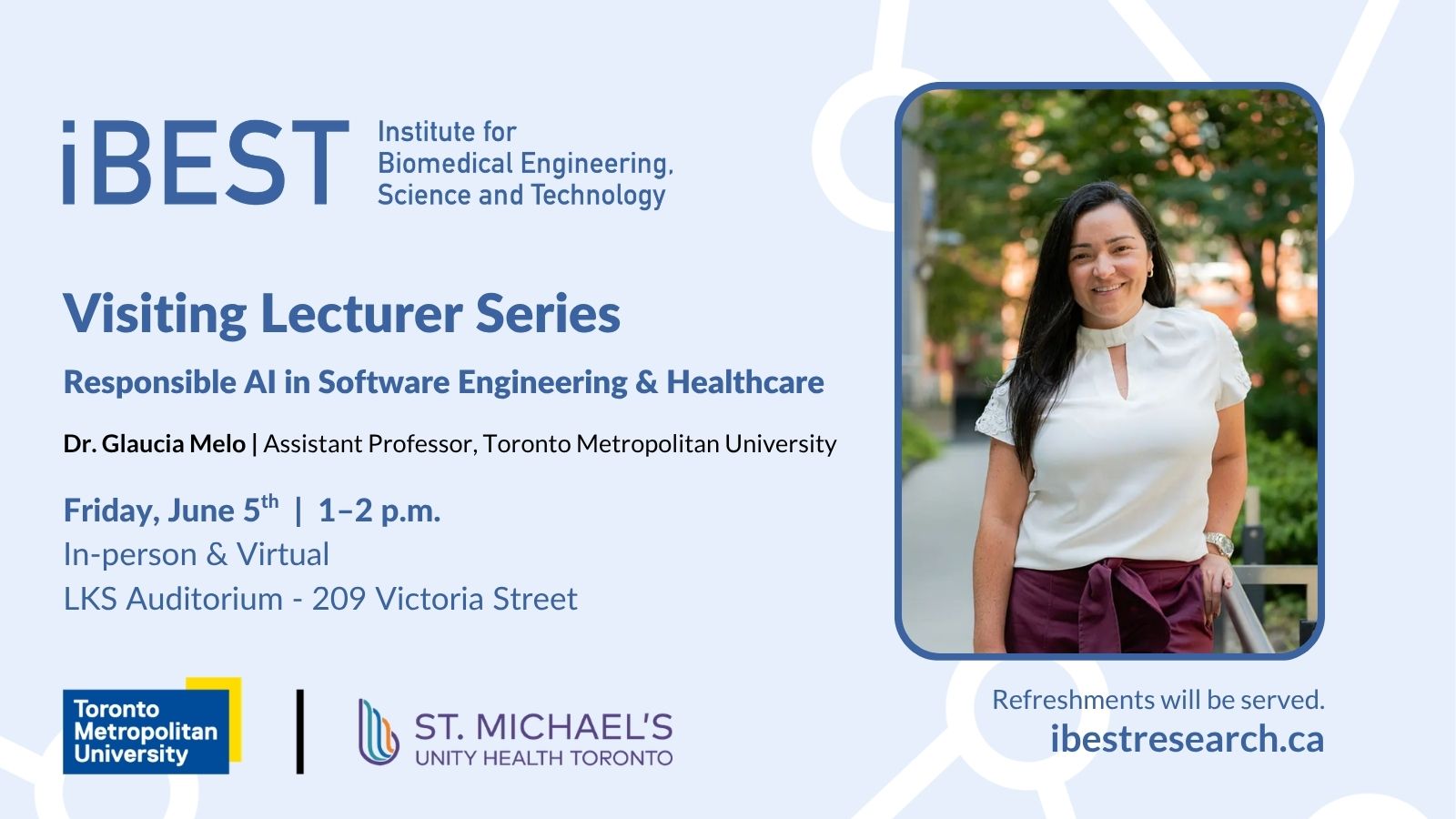
Responsible AI in Software Engineering & Healthcare
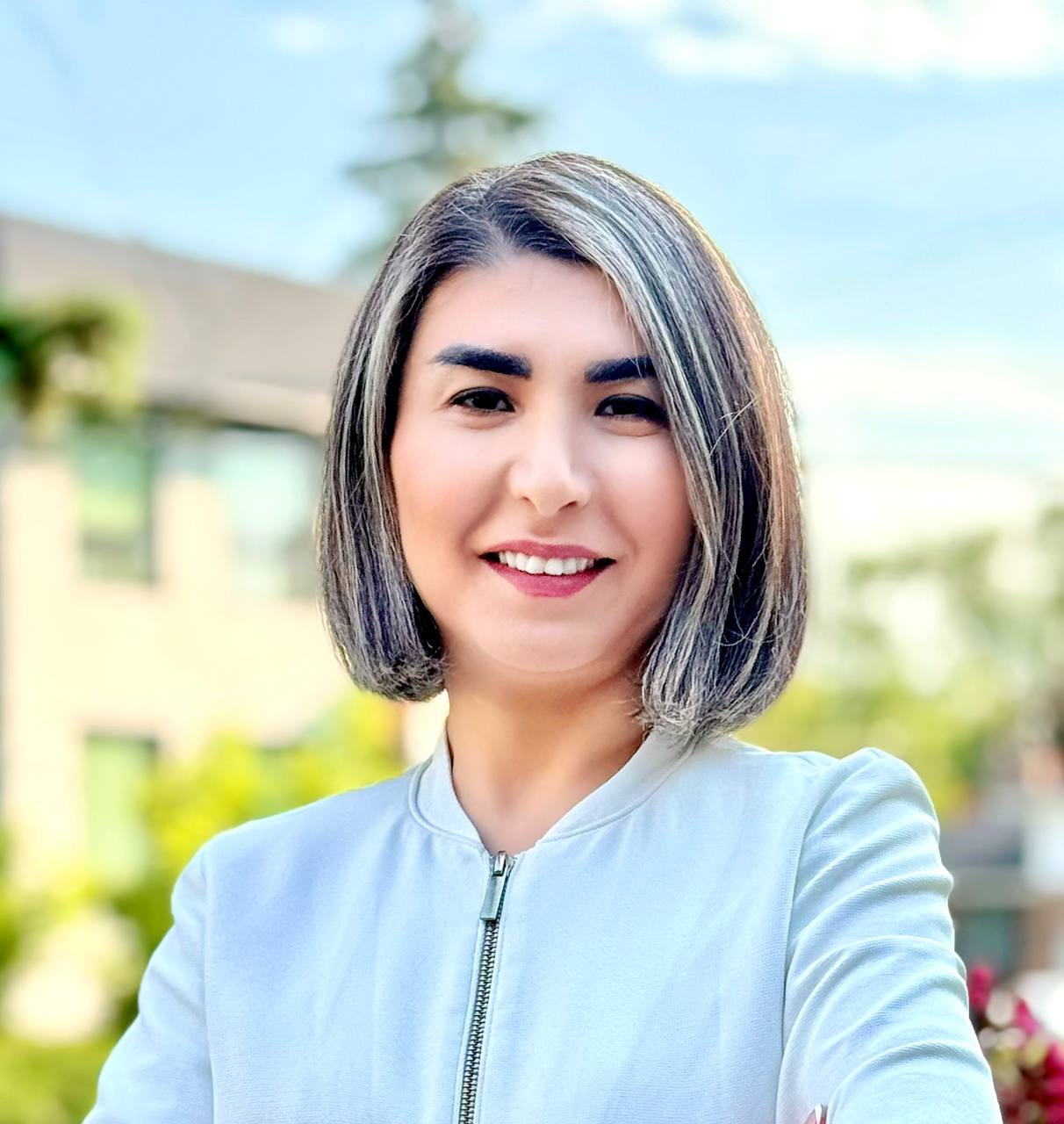
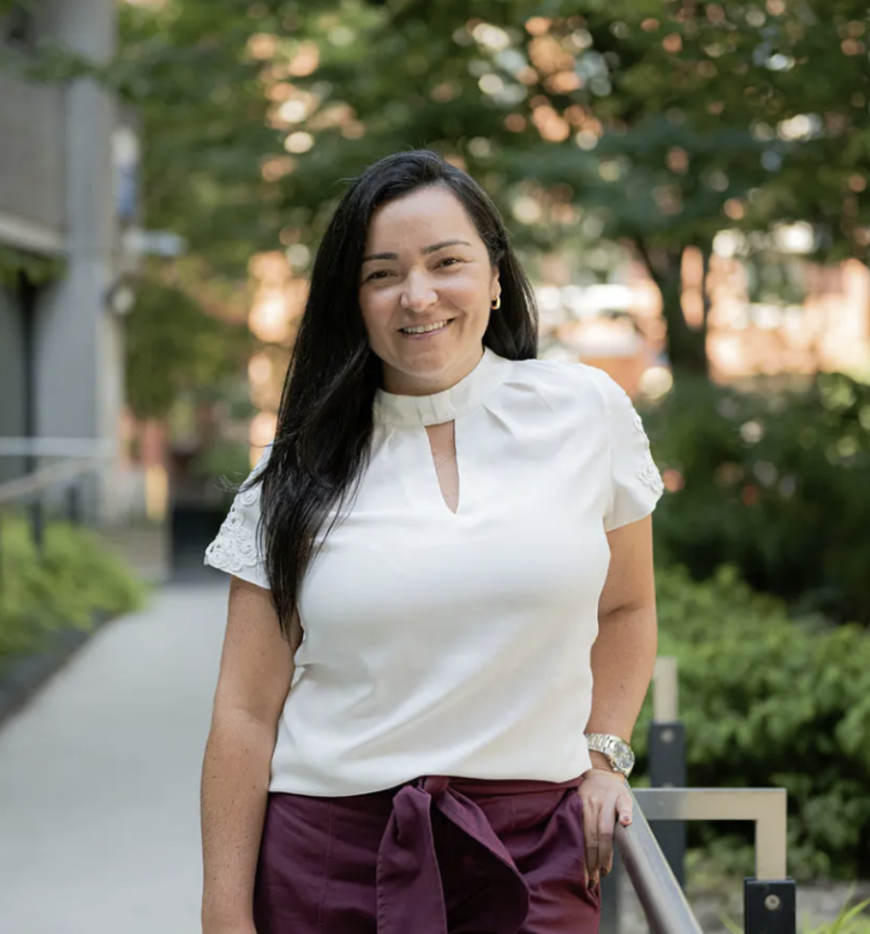
Dr. Glaucia Melo
Assistant Professor in the Department of Computer Science at Toronto Metropolitan University
Date: Friday, June 5, 2026
Time: 1–2 p.m. EDT
Location: In-person and virtual
LKS Auditorium – 209 Victoria Street, and via Zoom
Lecture Takeaways
The main takeaways are as follows:
- AI-generated code isn’t automatically safe. When developers use AI tools like GitHub Copilot or ChatGPT to write software, the code can look clean and pass standard checks — yet still contain hidden security flaws. Our research shows that how you instruct an AI, and which AI you choose, dramatically affects whether the output is trustworthy.
- The same risks may apply when AI explains health information. Large language models are increasingly used to summarize and interpret clinical data for patients and providers, but they can quietly introduce errors, lose critical nuance, or perform unequally across different patient groups. Our new iBEST project investigates what “reliable” AI-generated health explanation actually means.
- Responsible AI requires more than good technology, it requires good processes. Across both software and healthcare, our research finds that the biggest gains in safety and quality come not from switching to a better model, but from embedding validation, human oversight, and equity checks directly into the workflow from the start.
Biography
Dr. Glaucia Melo is an Assistant Professor in the Department of Computer Science at Toronto Metropolitan University. Her research focuses on artificial intelligence, empirical software engineering, human-AI interaction, adaptive systems, and the evaluation of large language models in software engineering and high-stakes domains. She holds a PhD in Software Engineering from the University of Waterloo, as well as MSc and BSc degrees in computing/software engineering from Brazil. Her work explores how AI systems can be made more reliable, explainable, human-centred, and socially responsible, with applications in software development, healthcare, accessibility, and autonomous systems.
No sign-up is required. For more information, contact the iBEST coordinator at ibest@torontomu.ca.